





As the weather warms, families gather outdoors, and communities come alive, one annual event gently reminds us of the rhythms that shape our lives, without us realising it: the Summer Solstice.
Every December, Australians experience the longest day and the shortest night of the year. While it often passes quietly in the background of beach trips, end-of-year celebrations, and festive preparations, the Summer Solstice has a rich history, deep cultural significance and a fascinating scientific story. Understanding it helps us appreciate how the environment shapes our wellbeing, daily routines, and the support people may need at home during warmer months.

What is the Summer Solstice?
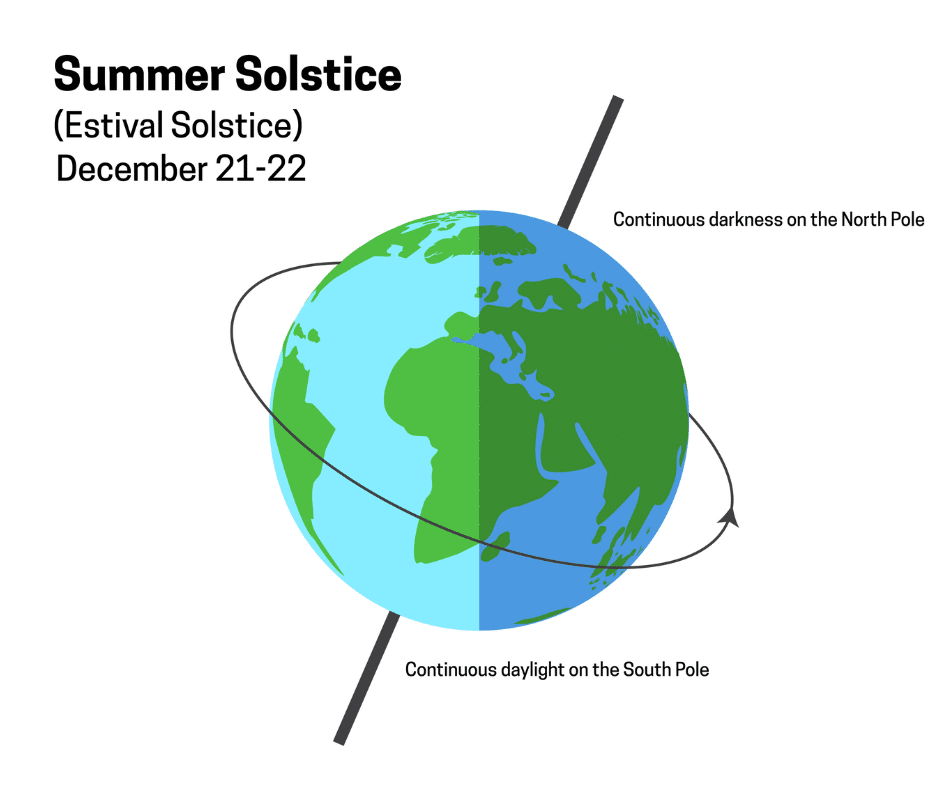
The summer solstice marks the moment when the sun reaches its highest point in the sky and appears directly over the Tropic of Capricorn. In the Southern Hemisphere, this occurs around the 21st- 22nd of December, signalling the peak of daylight hours for the year. For us in Australia, it will occur this year on Monday, the 22nd of December at roughly 2 am.
On this day, the Earth’s tilt (about 23.5 degrees) brings Australia closest to the sun. This means the sun follows its longest and highest arc across the sky, giving us extended daylight and often some of the hottest weather of the season. At either pole, there is continuous daylight at the time of the solstice.
Because of this, the Summer Solstice is more than a calendar milestone; it’s a turning point… literally. While days begin to slowly shorten afterwards, summer itself is just beginning. For many Australians, it represents the height of outdoor activity, connection with nature, and support needs that can arise in hot conditions, especially for seniors, people with disabilities, and those with chronic health challenges.
This is where KompleteCare can help, by providing high-quality in-home care to assist those with managing the warmer weather, keeping people independent and comfortable in their homes.
The opposite event is called the Winter Solstice, and that’s when we are farthest from the sun, resulting in the longest night and the shortest day. As the name suggests, this occurs in winter.
How the Summer Solstice Works
To understand the Summer Solstice, you must look at the Earth’s tilt and orbit. Rather than standing upright, our planet leans at an angle. This tilt is responsible for our seasons. As the Earth travels around the sun, different regions tilt towards or away from it at different times of the year. During the Summer Solstice, the Southern Hemisphere is angled directly towards the sun, which causes the sun to rise earlier and set later. This creates a longer solar path across the sky, leading to increased daylight and solar intensity.
This combination makes the Summer Solstice scientifically unique, creating a one-of-a-kind astronomical event that occurs only once a year. It’s culturally symbolic as it ties human life to the natural cycles of the earth in ways that are universal and understood without words. And the solstice has practical relevance to everyday life, especially when considering heat management, hydration, and safe well-being routines at home.
The First Observance of the Summer Solstice
Long before the modern calendar, people around the world noticed that certain days brought exceptionally long or short sunlight. Solstice observances have long been part of our history and often carried deep spiritual or agricultural meaning.
While not always referred to as a solstice, in Australia, many Aboriginal and Torres Strait Islander peoples recognised seasonal patterns through astronomy, animal behaviour, and environmental signals. They identified the changing positions of the sun throughout the year, using it to guide harvesting and food gathering, fire management, ceremonial seasons, and community movement.
In some areas, the sun’s rising and setting positions marked key transitions within the six-season calendars used across parts of Western Australia and the Northern Territory. These systems reflect a deep understanding of the summer solstice in Australia, even without the Western scientific terminology.
Around the world, ancient cultures tracked the sun’s movements and built structures aligned with solstice sunrises or sunsets. Places such as Stonehenge in the UK align with the summer solstice sunrise, Newgrange in Ireland lights up at the Winter Solstice sunrise, and the Mayan temples in Mexico create symbolic shadow patterns at the solstices.
There is evidence that the Summer Solstice has been culturally important since the Neolithic era (The New Stone Age), roughly 12,000 years ago. In Anglo-Saxon England, the Summer Solstice was referred to as ‘midsummer’, and we see different cultures celebrating the summer solstice, such as:
- Golowan (Cornwall, England)
- Jaanipäev (Estonia)
- Jāņi (Latvia)
- Joninės (Lithuania)
- Jónsmessa (Iceland)
- Juhannus (Finland)
The celebrations take place on the eve of Saint John’s feast, which throughout history has become closely associated with the date of the midsummer (Summer Solstice), when bonfires, fireworks, dancing, and music are played throughout the towns.
- Summer Solstice at Stonehenge in the United Kingdom
- Tiregān (Iran) is celebrated by splashing water, dancing, reciting poetry, and serving traditional foods.

The Summer Solstice Through Australian History
After British settlement, European traditions influenced recognition of the solstice. While Australia’s seasons did not mirror those in Europe, early settlers documented solstice events as they charted the Southern Hemisphere sky.
Over time, Australia developed its own relationship with the Summer Solstice, one more tied to summer celebrations, school holidays, bushfire awareness, beach activities, and festive gatherings.

The Summer Solstice Impact
At KompleteCare, we recognise that seasonal changes can affect daily life, well-being and the level of support someone may need at home. The warmer months often require hydration reminders, assistance with safe outdoor activities, help maintaining cool environments, wellbeing checks during extreme heat, and support with community engagement and summer events.
As the Summer Solstice marks a moment of transition, it reminds us of the importance of caring for each other, especially during seasons when challenges increase.
If you or a loved one needs some support this summer, reach out here. We are open 24/7 across the holidays.