





A disability support provider in South Australia’s Riverland has developed a custom-built driving simulator to help people with disability build confidence behind the wheel.
The initiative, led by Support & Connect director Dylan Backley, was developed in response to the limited access to tailored driver training in regional communities.
While metropolitan areas often have specialist instructors and adaptive driving programs, learners in rural and remote regions can face significant barriers, including long travel distances and fewer learning environments designed to accommodate different support needs.
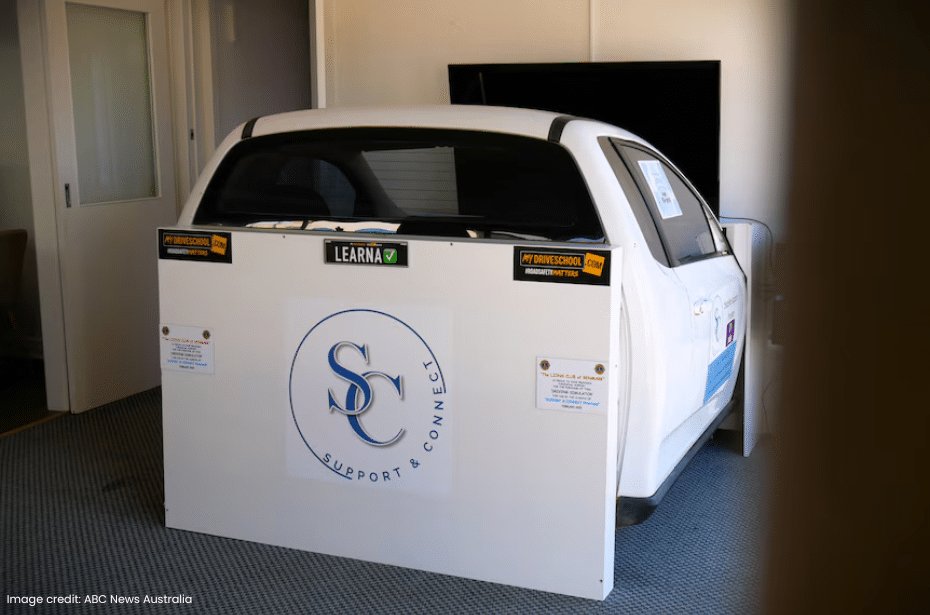
To help close this gap, Support & Connect adopted simulation technology originally developed by MyDriveSchool, a training program designed to improve learning outcomes and reduce anxiety for new drivers.
The Riverland service provider adapted the technology further, integrating it into the body of a real vehicle to create a fully immersive training space complete with operational pedals, steering controls, and screen-based road environments.
‘I found a common trend in my participants was that they had a lot of anxiety around driving, especially on-road,’ says Backley.
The setup gives learners the opportunity to practise road awareness, hazard response, vehicle control, and everyday driving scenarios in a controlled environment.
Support Workers are also available during each session to provide guidance, reassurance, and adjustments to suit individual learning pace and comfort levels.
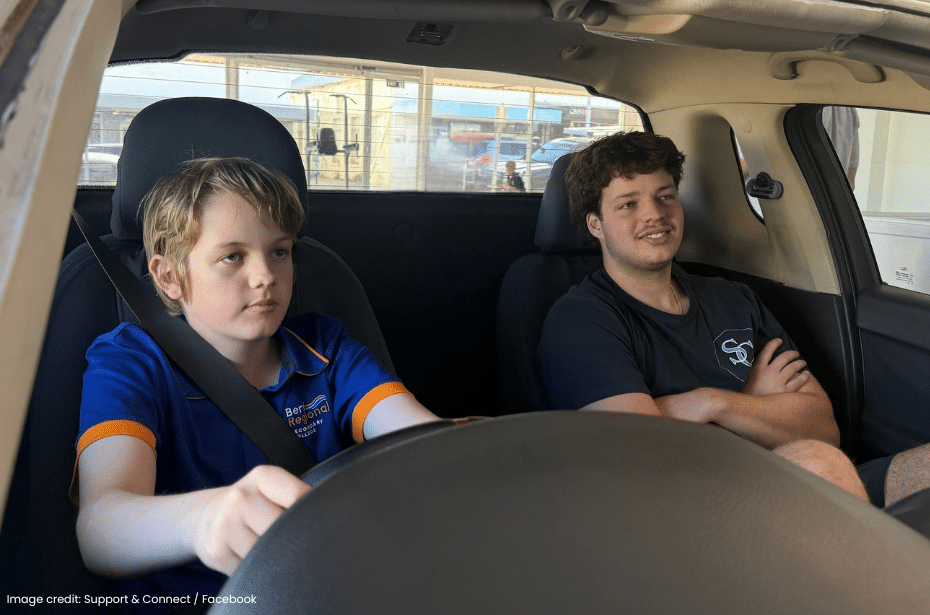
Early results of the program have shown noticeable improvements among participants in both skill development and readiness to progress to on-road driving.
For many, the simulator provides a critical steppingstone between passing the Driver Knowledge Test (DKT) and feeling prepared to enter real-world road environments.
The initiative also carries significance for regional communities, where access to transport can influence employment, education, and social participation.
For those living with disabilities, a lack of accessible driver training can also contribute to reduced independence and increased isolation.
‘Being able to drive is a massive goal for any young individual,’ says Blackley. ‘But for people with disabilities, it’s about independence.’
Simulation-based training has been gaining national attention, with MyDriveSchool’s technology referenced in ongoing discussions on youth road safety and inclusive driver education models.
Advocates say the approach can reduce anxiety among learner drivers, while providing a safe environment to practise skills.
‘To anyone feeling nervous about learning to drive, I would say it’s a very common feeling. Our simulator provides a steppingstone to gaining your license and your independence,’ says Blackley.
As a local support provider, KompleteCare supports approaches that strengthen autonomy and encourage participation in community life. Initiatives like this reflect the value of investing in practical, accessible opportunities for people living with disabilities.
Support & Connect plans to continue expanding access to the simulator throughout the Riverland over the coming year, with the aim of supporting more learners to work towards their driving goals.
To get started with the driving simulator, contact the team at Support & Connect on (+61) 438 462 379, or via email on admin@supportandconnect.net.